Silk Studio
AI Portrait Experience
A privacy-first mobile journey from entry and creation to transparent AI controls. The project treats trust, consent, edit history, and cloud-processing disclosure as interface moments rather than legal footnotes.
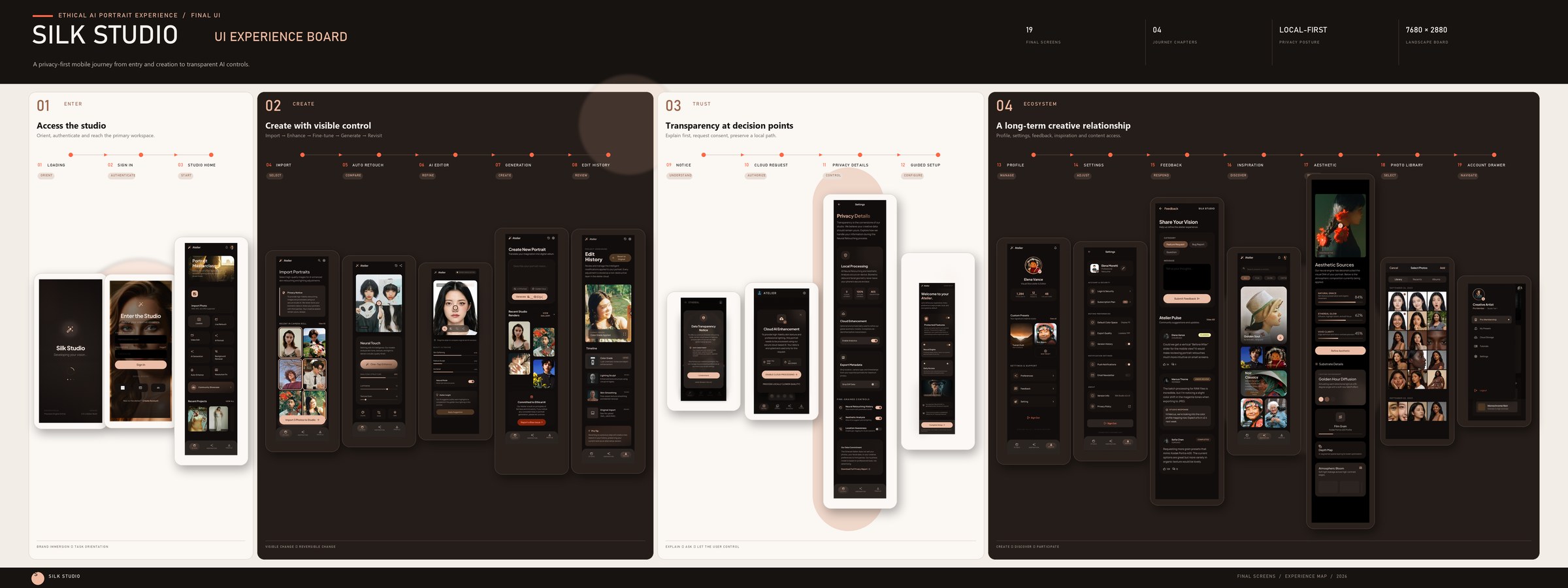
Make AI portrait creation feel controlled before it feels magical.
AI portrait tools often foreground speed and visual novelty while hiding model actions, cloud processing, source images, and revision history. Silk Studio reverses that emphasis: the creative flow remains polished, but the user can see what is being imported, enhanced, generated, stored, and revisited.
For generative portrait interfaces, privacy is not a settings page. It is a sequence of visible decision points distributed across the entire journey.
The board is organised as four chapters, not a screen dump.
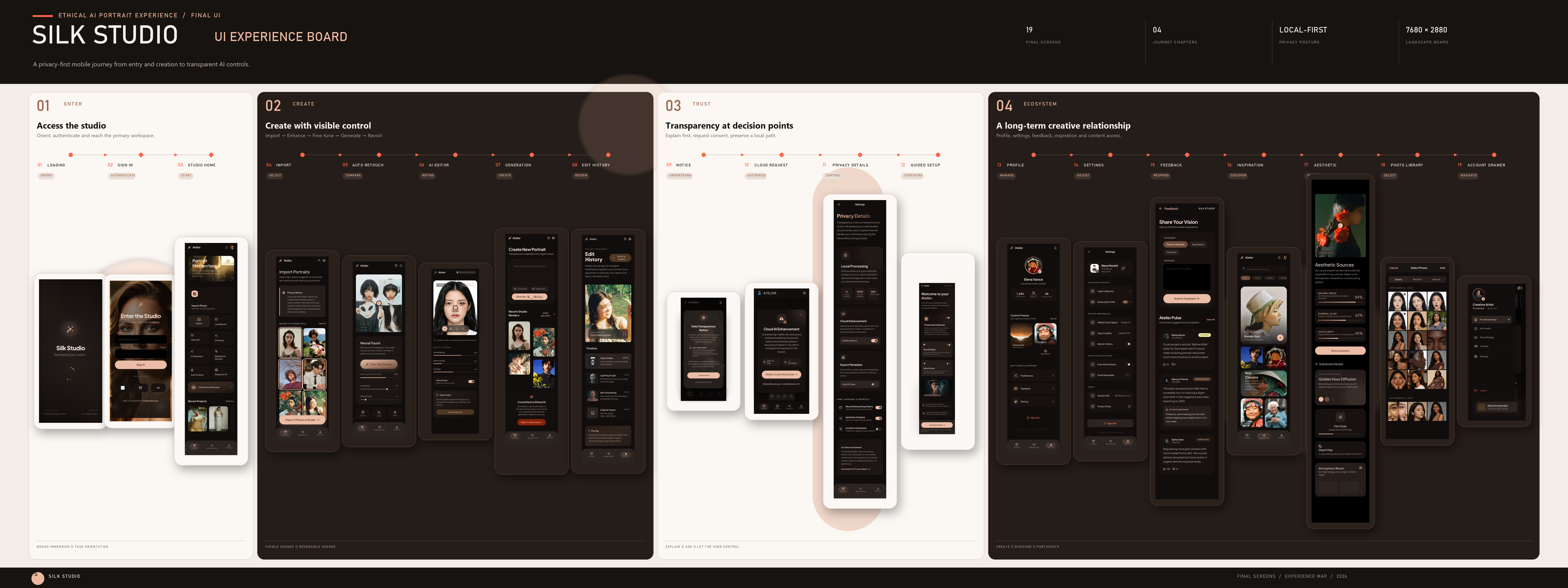
The final board maps 19 screens into four chapters: entering the studio, creating with visible control, transparency at decision points, and sustaining a long-term creative relationship. This makes the interface read as a service experience instead of a static app gallery.
- 01Access the studio: loading, sign-in, task orientation
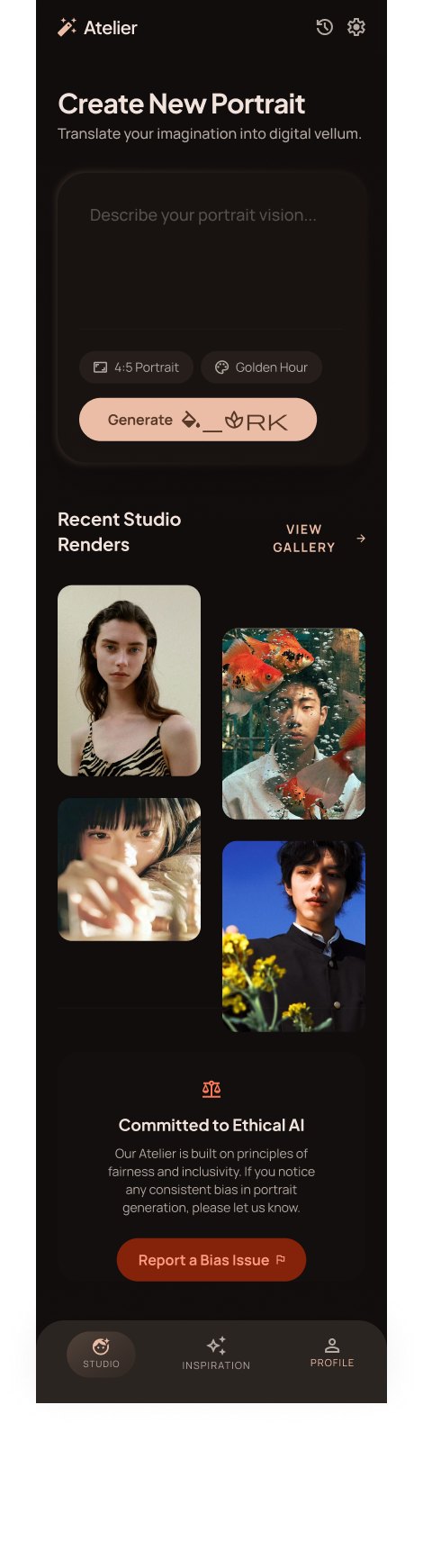
- 02Create with visible control: import, enhance, retouch, generate, revisit
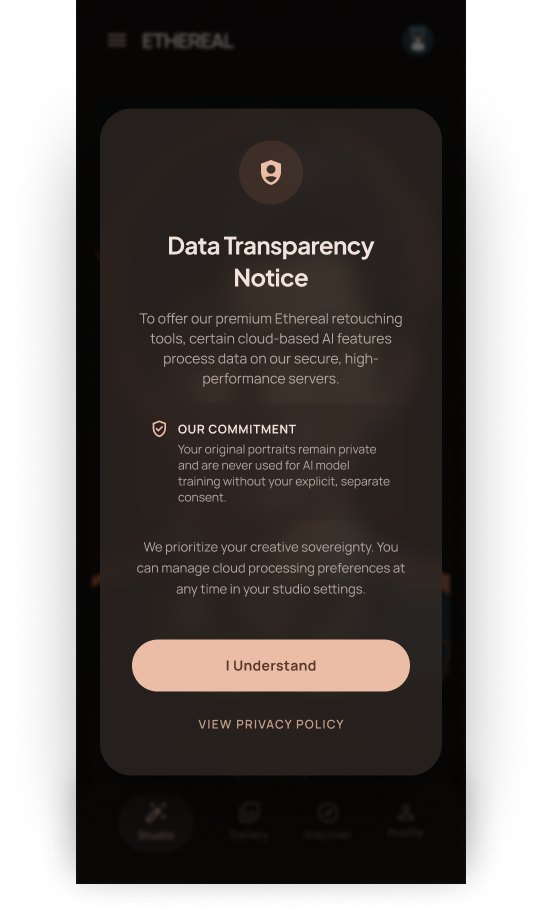
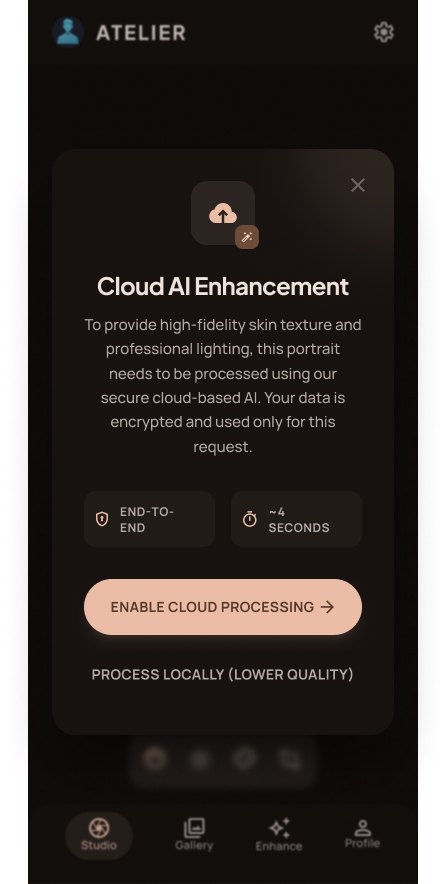
- 03Trust at decision points: notice, cloud request, privacy details, guided setup
- 04Ecosystem: profile, settings, feedback, inspiration, aesthetic sources, library
Transparency is placed where the user is about to give something up.
Instead of hiding privacy controls behind a menu, the journey introduces disclosure at moments of import, enhancement, cloud processing, generation, feedback, and library storage. The goal is to make system behaviour explainable at the moment it affects agency.
- Consent as actionThe cloud-processing request makes authorisation explicit before enhancement continues.
- Edit history as memoryReversible change and visible history reduce the feeling that AI has overwritten the original work.
- Privacy as postureLocal-first language positions the service around restraint rather than unlimited extraction.
- Feedback as governanceUser feedback, source selection, and aesthetic controls make the creative relationship adjustable over time.
The product extends beyond one portrait generation task.
The later screens shift from task completion to relationship management: profile, settings, feedback, inspiration, aesthetic source inspection, photo library, and account drawer. This supports a longer-term creative loop while keeping data and model choices visible.
One landscape board makes the whole experience legible at once.
The final 7680 × 2880 board uses dark warm panels, pale trust sections, red-orange journey lines, and grouped phone mockups to distinguish immersion, creation, transparency, and ecosystem layers.
Responsible AI interface design is choreography between desire and restraint.
Silk Studio needed to remain visually seductive because portrait tools depend on aesthetic aspiration. But every seductive moment also needed an answering control: visible import, reversible edits, privacy detail, cloud authorisation, feedback, and source inspection.
A trustworthy AI portrait product should not ask users to trust a black box. It should make each system handoff small, visible, and reversible enough for users to keep creative ownership.