AI–Human
Animation Workflow
A 20-participant study comparing manual and AI-assisted Live2D production to locate real efficiency gains—and the rework hidden behind them.
Does AI remove work—or move it somewhere else?
Character animation pipelines contain many dependent steps. A faster slicing stage may look transformative, but errors can propagate into layer cleanup, rigging, and motion quality.
The study measured the whole production sequence rather than treating AI generation as an isolated task. The question was not simply whether AI is faster, but where time is saved, where it returns as rework, and what control artists still need.
Keep the output stable; change the production path.
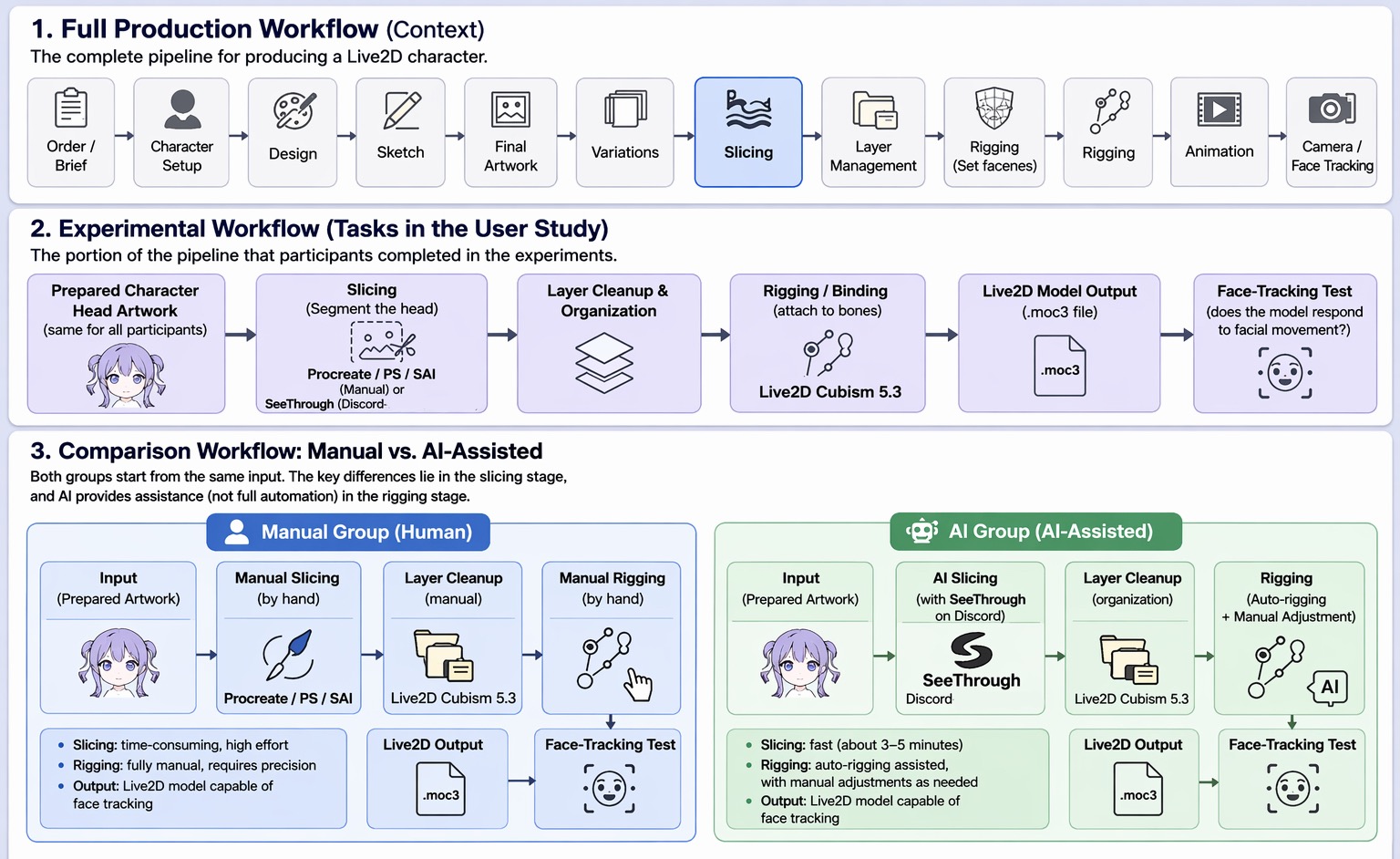
Twenty participants completed a controlled A/B comparison. Both conditions moved toward the same Live2D character output and face-tracking test. The manual condition used manual slicing, layer cleanup, and manual rigging. The AI-assisted condition used SeeThrough for slicing and auto-rigging, followed by human cleanup and adjustment.
Manual slicing → layer cleanup → manual rigging → Live2D output → face-tracking test.
AI slicing → cleanup → auto-rigging with manual adjustment → same output and tracking test.
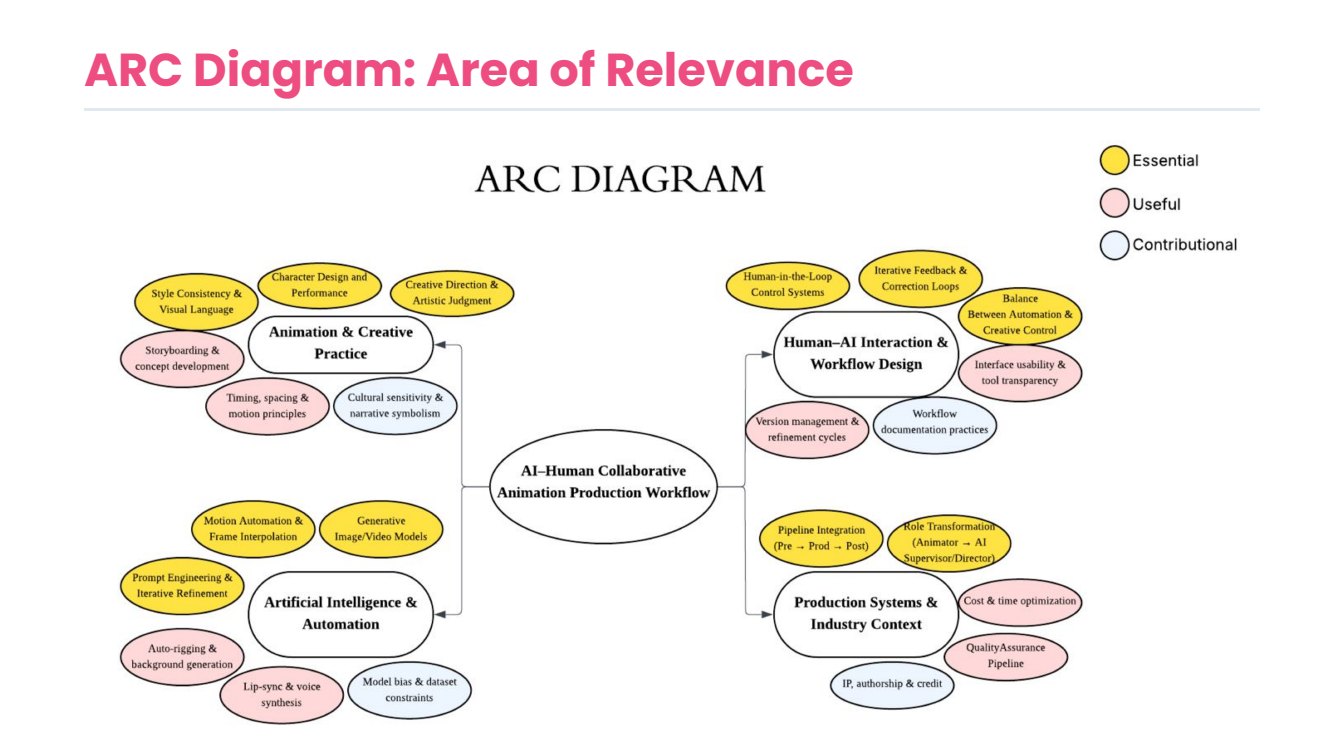
The experiment sits inside a longer creative pipeline.
The full sequence moves from brief, character setup, design, sketching, final artwork, and variations into slicing, layer management, rigging, animation, and camera or face tracking. AI changed the slicing and rigging path; it did not replace art direction, cleanup, judgement, or output testing.
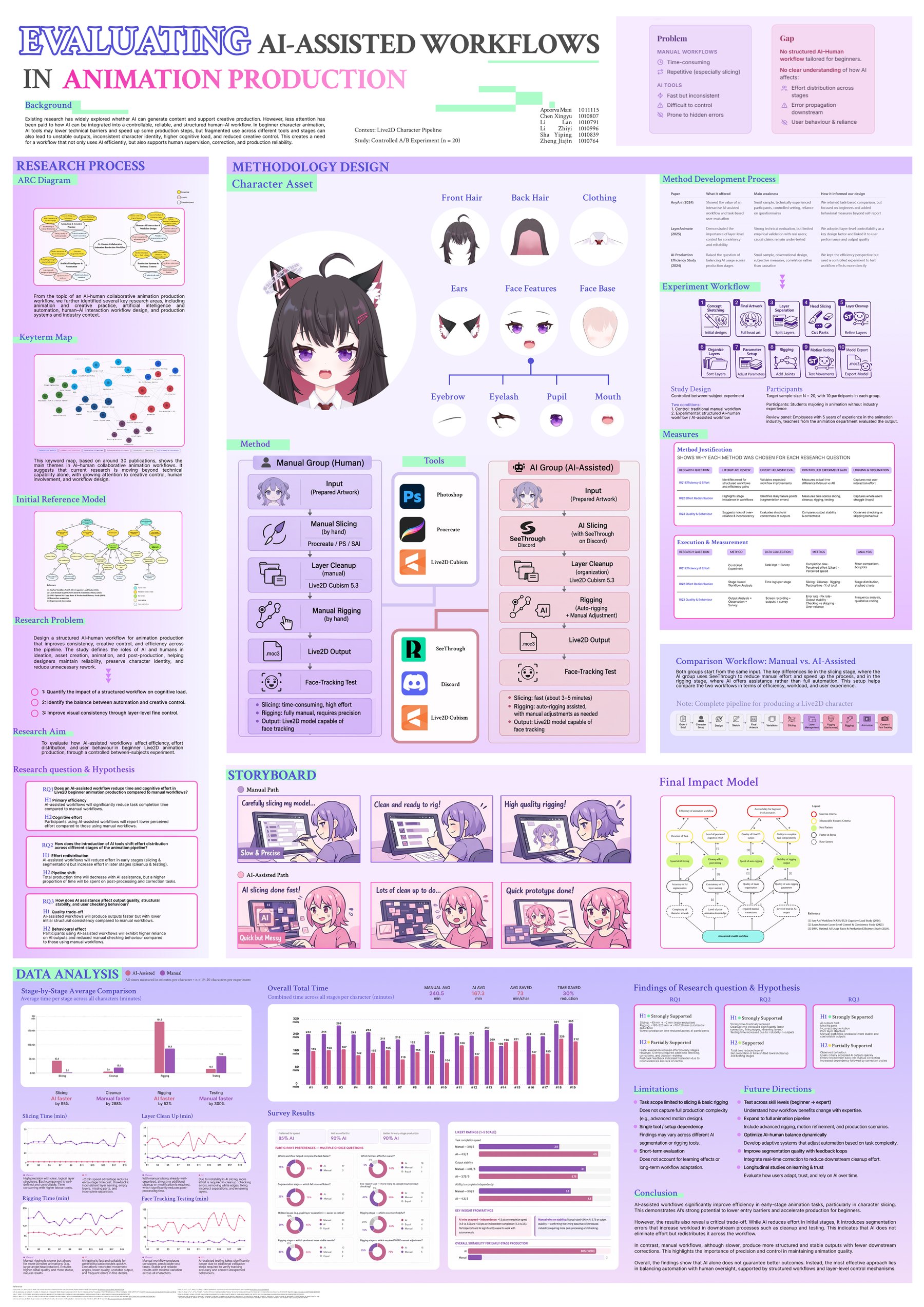
The largest gain appears early; the final gain is smaller but still meaningful.
Average total production time fell from 240.5 minutes in the manual workflow to 170.3 minutes with AI assistance. That is an average saving of 70.3 minutes per character, or roughly 30 percent of total time.
AI slicing was approximately 95 percent faster than manual slicing in the reported study. However, total production did not improve by the same proportion because generated segmentation errors required cleanup and influenced later steps.
Automation compresses one task and exposes the cost of weak handoffs.
- Segmentation errorsIncorrect boundaries and missing regions create manual cleanup before rigging can proceed.
- Downstream couplingLayer mistakes affect deformation, rig behaviour, and motion quality later in the pipeline.
- Skill distributionLess time is spent on first-pass slicing; more judgement is concentrated in review and correction.
- Quality controlSpeed is useful only when artists can inspect, override, and repair AI output at layer level.
Design AI tools around correction, not just generation.
The results argue for structured workflows with layer-level preview, confidence or error signals, reversible actions, manual override, and fast comparison between generated and corrected states. A useful AI tool should make uncertainty inspectable before it becomes expensive rework.
The study demonstrates a meaningful efficiency difference in this task and setup. It does not establish universal productivity gains across all artists, character styles, tools, or production environments.
The best unit of analysis was not ‘AI versus human’. It was the handoff between them. That is where time, quality, trust, and creative control were negotiated.