ElderCare
Plain-Language AI
A connected care concept that simplifies only clinician-provided instructions, requires doctor approval, and turns them into clear actions, visual reminders, and timed routines.
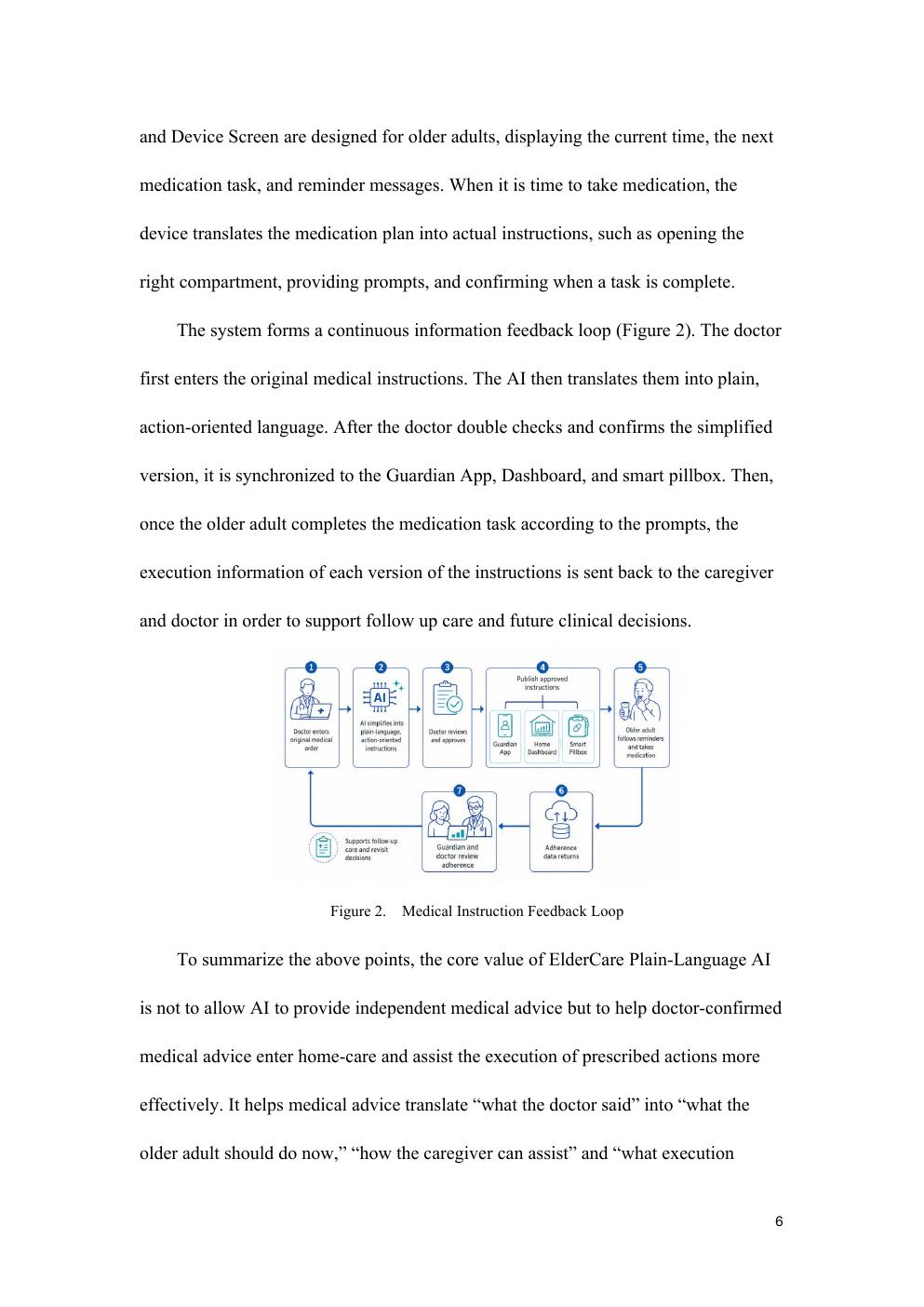
The care plan can be correct and still be hard to act on.
After a medical visit, older adults may receive dense, text-heavy instructions covering medication, follow-up, self-care, and warning signs. Understanding the document is only the first step; remembering and performing each action over time is the real service challenge.
The concept reframes plain language as a connected action system—not merely shorter text. Each instruction must become visible, timed, checkable, and shareable with the right person.
The AI does not create medical advice. It only reformats instructions supplied by a clinician, and a doctor must review and approve the simplified version before release.
Reduce what must be remembered; clarify what can be done now.
- Cognitive loadBreak dense instructions into short, sequenced actions with visible priority.
- External cognitionMove memory work into reminders, labels, and persistent environmental cues.
- Memory retrievalUse consistent visuals, timing, and device locations to make the next action easier to retrieve.
- Action feedbackClose the gulfs of execution and evaluation by showing what to do and whether it is complete.
Human approval sits inside the workflow—not outside it.
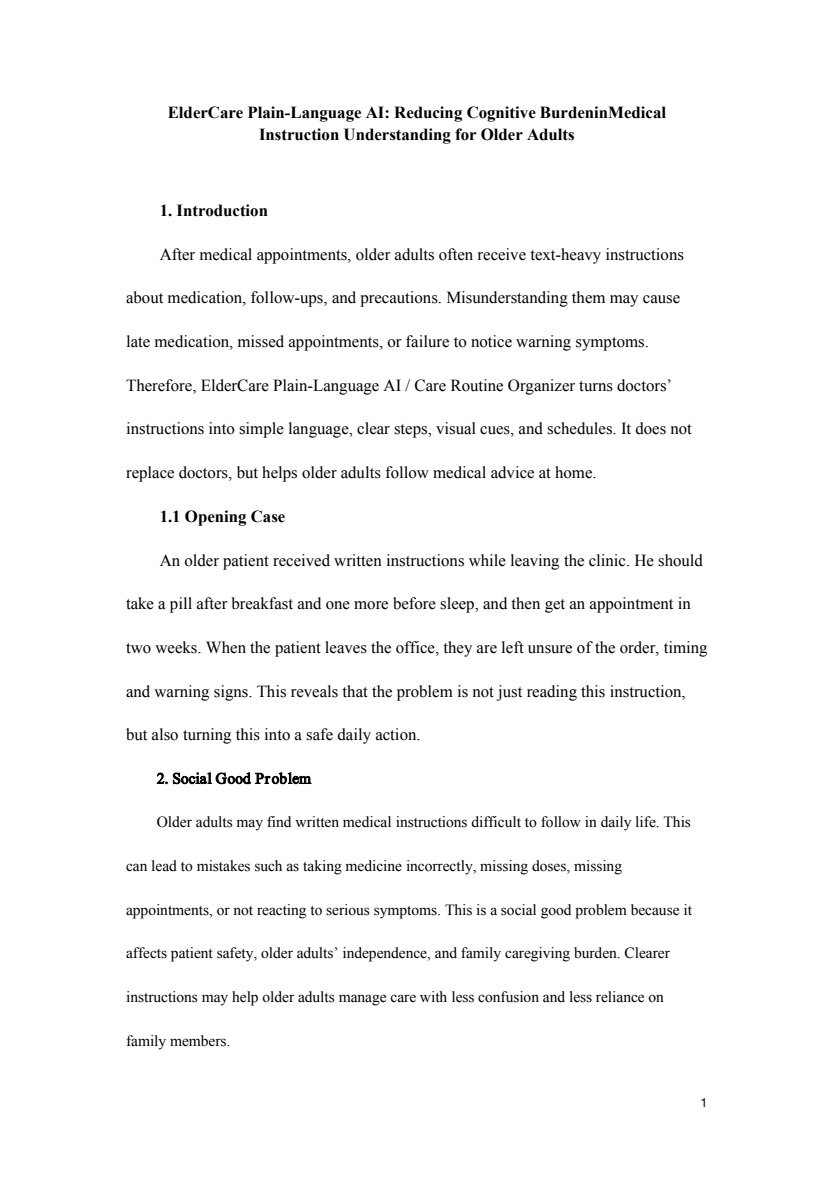
The service begins with a doctor’s order. AI proposes a plain-language version and action sequence. The doctor reviews and approves it. Only then is the plan distributed to the guardian app, home dashboard, device screen, and smart pillbox. Completion data can return to the care network for follow-up.
- 01Doctor provides the source instruction
- 02AI proposes a plain-language action plan
- 03Doctor reviews and approves
- 04Devices guide action and return status
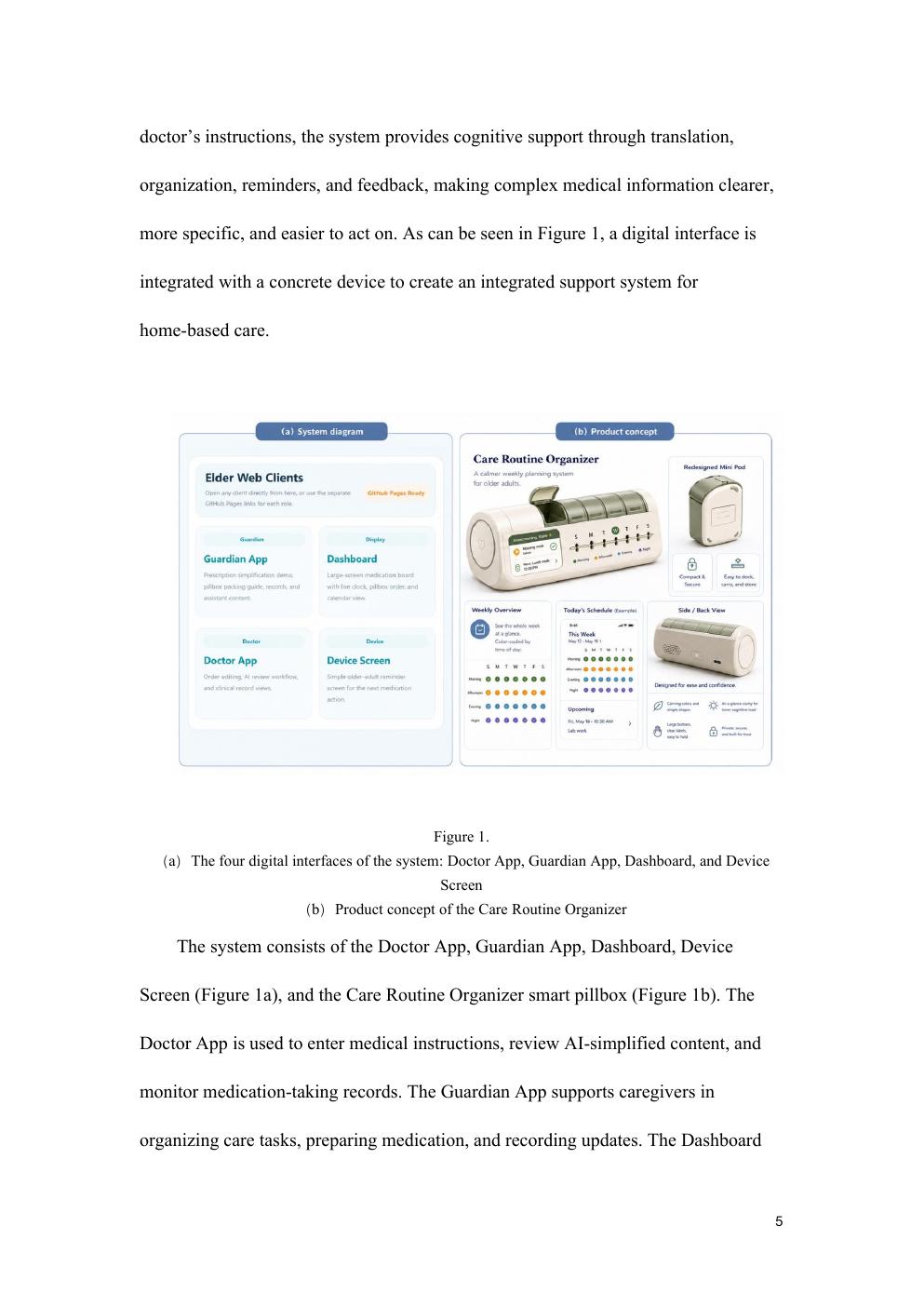
One care plan, translated for four different moments.
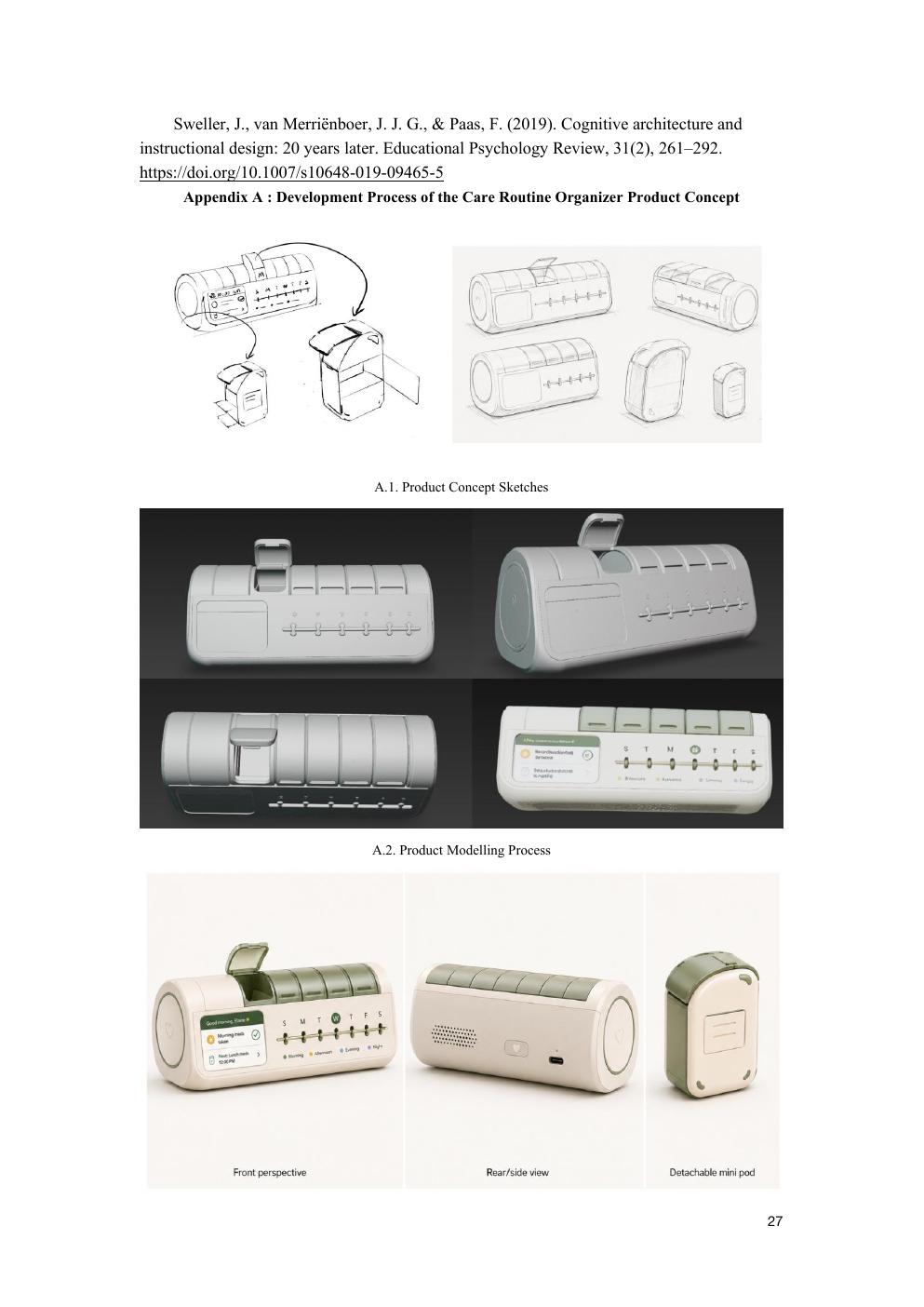
The doctor interface prioritises source fidelity and approval. The guardian app supports oversight. The home dashboard makes today’s routine visible. The device screen and smart pillbox turn the next action into a concrete prompt at the place it happens.
The study plan is part of the design—but the results do not exist yet.
The proposal outlines how comprehension, task completion, recall, confidence, and caregiver coordination could be compared. Its hypotheses and expected results are not presented here as validated outcomes.
Concept architecture and interface logic are developed. Clinical usefulness, comprehension improvement, adherence change, model reliability, and caregiver burden still require empirical evaluation.
Responsible AI is a service choreography problem.
My documented contribution covered brainstorming, secondary research, proposal and thesis writing, product-design discussion, web-based software design, product drafts and poster work, and product rendering.
The central limitation is that plain language alone cannot guarantee safe action. The system must preserve source meaning, expose uncertainty, support correction, protect health data, work without overburdening caregivers, and fail safely when the model or network is unavailable.
The safest role for AI here is bounded transformation: simplify a trusted source, keep a human reviewer in control, and make every handoff visible to the people responsible for care.